Emergency Dentist Bakersfield CA: Relief for Swollen Gums and Jaw Pain
Swollen gums and jaw pain have a way of taking over everything. Eating becomes work. Talking feels awkward. Sleep gets chopped into short, miserable stretches. Even people with a high pain tolerance often say the same thing when this hits: it started as an annoyance, then within a day or two it became impossible to ignore.
That is usually the moment patients start searching for an Emergency Dentist Bakersfield CA. They are not looking for theory. They want to know whether the swelling is dangerous, what they can do right now, and how quickly they need treatment.
The short answer is that swollen gums and jaw pain can come from something minor, but they can also point to an infection, an abscess, a cracked tooth, a gum problem, or an impacted wisdom tooth. The jaw can hurt because the source is in the gums, inside a tooth, in the joint, or deeper in the tissues around the mouth. The challenge is that these problems can feel surprisingly similar in the early stages. A patient might assume it is a simple toothache when the real issue is a spreading infection, or blame the gums when the source is actually a fractured molar.
That is why urgent dental care matters. The sooner the cause is identified, the better the odds of controlling pain, limiting damage, and avoiding more invasive treatment later.
When swollen gums are more than simple irritation
Not every case of gum swelling is a dental emergency. People sometimes get localized tenderness from brushing too hard, a popcorn hull stuck under the gumline, or a brief flare-up from gingivitis. Those cases are uncomfortable, but they often settle once the irritation is removed and the area is cleaned properly.
The picture changes when swelling comes with throbbing pain, a bad taste in the mouth, pus, facial puffiness, fever, or pain that seems to spread into the jaw, ear, or neck. That pattern raises concern for infection. In practice, one of the most common reasons people seek emergency dental care is a gum or tooth infection that has built pressure in the tissues. Pressure is what creates that deep, relentless ache many patients describe. It is also why lying down at night can make it feel worse.
One of the more deceptive presentations is swelling that looks small in the mirror but feels huge to the patient. That usually means inflammation is building under the surface. Another common pattern is a lower back tooth that becomes hard to bite on, followed by soreness in the jaw angle. People often think they strained the jaw chewing, but the chewing pain is just revealing a tooth or gum problem that was already there.
In Bakersfield, dry weather and dehydration can add another layer. A dry mouth does not directly cause an abscess, but it can worsen irritation, reduce the cleansing effect of saliva, and make inflamed tissues feel much more uncomfortable. It is not the root problem, but it often makes symptoms feel sharper.
Why jaw pain can be tricky
Jaw pain sends people in several directions at once. Some assume they need a dentist. Others think they need a physician, or that they simply clenched their teeth too hard during sleep. Sometimes any of those guesses could be partly right.
Dental causes of jaw pain are common. Infected molars, erupting wisdom teeth, advanced gum disease, cracked teeth, and severe decay can all create pain that radiates through the jawbone and surrounding muscles. Patients often describe it as soreness “in the jaw” rather than “in the tooth,” especially when the pain is diffuse.
Then there is the jaw joint itself. Temporomandibular joint problems can cause aching near the ear, stiffness, clicking, and pain with chewing. Grinding and clenching can make gums feel tender too, because overloaded teeth and inflamed muscles create a general sense that the whole side of the mouth hurts. The distinction matters because treatment for a dental infection is very different from treatment for a joint flare-up.
I have seen many cases where the patient was convinced the problem was sinus pressure or a jaw joint issue, only to find a lower molar with a hidden crack or a gum pocket trapping bacteria. I have also seen the reverse, where someone feared an infected tooth but the teeth tested normally and the pain pattern fit muscle tension and joint inflammation. Good emergency dental evaluation does not just chase the loudest symptom. It sorts out where the pain actually starts.
What an emergency dentist looks for first
When someone comes in with swollen gums and jaw pain, the first priority is not cosmetic and it is not long-term planning. It is triage. Is the airway affected? Is the swelling spreading? Is there fever? Is the pain coming from a specific tooth, the gums, the wisdom tooth area, the jaw joint, or surrounding soft tissue?
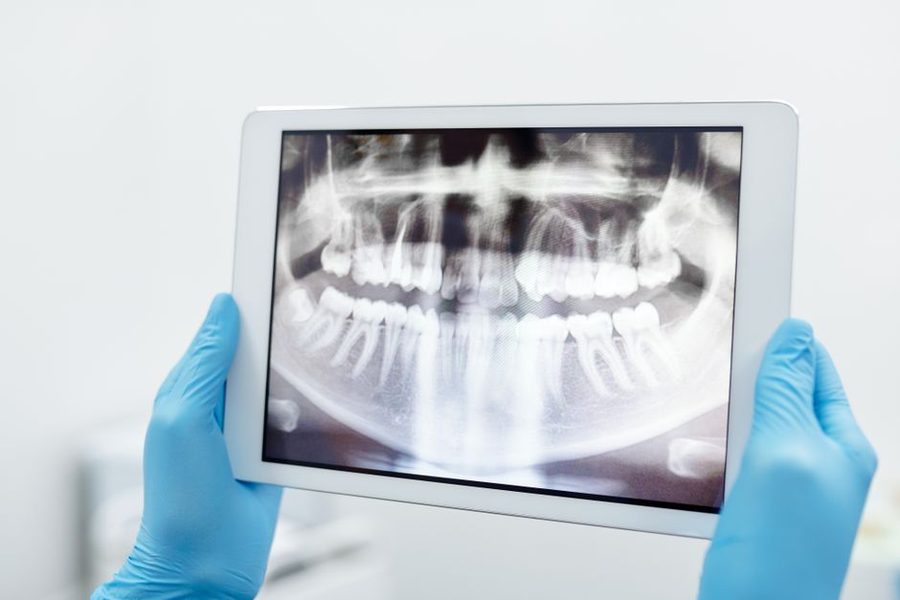
A focused exam usually includes a close look at the gums, percussion testing on the teeth, checking for mobility, bite evaluation, and often dental X-rays. X-rays are especially useful when the visible swelling is only part of the story. A tooth root infection, bone loss, an impacted tooth, or decay between teeth may not be obvious from the surface.
Patients are often surprised that the sorest spot is not always the true source. Referred pain is common in dentistry. An upper tooth can create pain felt in the cheek or around the jaw. A lower molar can make the ear area ache. Inflamed gums near a wisdom tooth can create pain that feels like it is in the throat. That is one reason home diagnosis is so unreliable.
Signs you should seek urgent care quickly
Some symptoms deserve prompt attention the same day, not “wait and see.” These are the patterns that tend to worsen fast or carry more risk:
- swelling of the gums, face, or jaw that is getting larger
- fever, chills, or feeling generally ill along with dental pain
- difficulty swallowing, opening the mouth, or breathing comfortably
- pus, drainage, or a persistent foul taste coming from the gums or around a tooth
- severe pain that keeps you from sleeping, eating, or functioning normally
A dental infection can spread beyond the tooth or gum. That does not happen in every case, but it happens often enough that increasing swelling should never be brushed off. If breathing or swallowing becomes difficult, that moves beyond routine urgency and needs immediate medical attention.
Common causes behind swollen gums and jaw pain
There is no single explanation for these symptoms, but a few causes show up again and again in emergency dental settings.
A tooth abscess is high on the list. This happens when bacteria get into the pulp of the tooth, usually through decay, a crack, or an old failing filling. The infection can travel through the root and into surrounding bone and soft tissue. Many abscesses produce intense pain, though not all do. Some drain intermittently, which briefly lowers pressure and fools the patient into thinking the problem is improving. It is not improving. It is finding a temporary outlet.
Gum abscesses are another possibility. These often form when bacteria collect in a deep gum pocket or when debris gets trapped under the gum tissue. The area may look puffy, red, and shiny. It can be very tender to touch and may drain when pressed.
Pericoronitis is especially common around partially erupted wisdom teeth. A flap of gum can trap food and bacteria over the tooth. Patients often report pain at the very back of the mouth, swelling, bad breath, and jaw stiffness. If the swelling worsens, opening the mouth can become difficult.
A cracked tooth can cause both gum irritation and jaw pain. The crack may be hard to see, especially if it runs below the gumline or through a cusp. Patients often say it hurts to bite, then eases when they stop, until the pain becomes more constant.
Advanced gum disease can also produce swelling, soreness, and a dull ache through the jaw area. This tends to be more chronic, but it can flare acutely when infection intensifies around one or more teeth.
Finally, not all gum swelling is infectious. Trauma from hard foods, aggressive flossing, ill-fitting dental work, or severe clenching can inflame tissues enough to mimic an emergency. Those cases still deserve evaluation, especially if the pain is significant or the cause is not clear.
What you can do before you are seen
People often ask the same urgent question over the phone: what can I do right now? The goal at home is to reduce irritation and keep symptoms from escalating while you arrange care. Home remedies do not treat the underlying cause of an abscess or serious infection, but they can buy you some comfort.
- rinse gently with warm salt water several times a day
- keep the area as clean as you can without scrubbing it aggressively
- use a cold compress on the outside of the face if swelling is present
- take over-the-counter pain medicine as directed on the label, if you normally can take it safely
- avoid very hot, very cold, sugary, or hard foods that trigger pain
A few cautions matter here. Do not place aspirin directly on the gum. People still try this, and it can burn the tissue. Do not poke swollen gums with sharp objects to “drain” them. That usually makes things worse and can push bacteria deeper. If a tooth is the likely source, chewing on the opposite side can help temporarily, but that is not a substitute for treatment.
If you are already on antibiotics prescribed for a different issue, do not assume they are handling a dental infection. Some are not appropriate for common oral infections, and antibiotics alone often do not solve the source problem if drainage or dental treatment is needed.
What treatment may involve
Emergency dental treatment depends entirely on the cause. For an abscessed tooth, the dentist may need to create drainage, begin root canal treatment, or in some cases remove the tooth if it cannot be saved. For a gum abscess, cleaning under the gumline and draining the infection may bring fast relief. If the issue is pericoronitis around a wisdom tooth, irrigating the area and controlling infection can calm things down, but a future extraction is often part of the bigger plan.
This is the part patients sometimes find frustrating. They show up hoping for one universal fix, but swollen gums and jaw pain are a symptom pair, not a diagnosis. The right treatment is the one that removes the cause, not just the pain.
Pain control is also handled case by case. Once pressure is relieved, patients often feel noticeably better within hours. Not perfect, but dramatically better. That is one reason emergency dental care can feel so different from trying to tough it out at home. Pressure from infection rarely responds well to wishful thinking. It responds to drainage, removing the diseased tissue, or stabilizing the damaged tooth.
Antibiotics may be part of the plan, especially if there is spreading infection, facial swelling, fever, or significant soft tissue involvement. But a good dentist will usually explain an important truth: antibiotics are support, not the definitive fix. If the tooth is infected internally, it still needs root canal treatment or extraction. If a gum pocket is harboring infection, it still needs professional cleaning and management.
The question patients almost always ask: can it wait until tomorrow?
Sometimes, yes. Often, no.
If you have mild tenderness after flossing too aggressively, no swelling, and no pain with biting, it may be reasonable to monitor briefly. But if the swelling is obvious, the pain is building, sleep is interrupted, or the jaw feels stiff or sore, delaying care is risky. Dental infections are unpredictable. Some simmer for weeks. Others escalate within a day.
One pattern worth mentioning is the “weekend pause.” A patient develops pain on Friday, decides to manage it at home, feels a little better Saturday after pain medicine, then wakes up Sunday with facial swelling. That is not rare. The reduction in pain can simply mean pressure has shifted https://erickpwfr059.cloudhinter.com/posts/how-emergency-dentist-bakersfield-ca-services-support-long-term-oral-health or drainage has begun, not that the infection is gone.
Searching for an Emergency Dentist Bakersfield CA at the first sign of meaningful swelling is often the smarter move than waiting for a full-blown crisis.
Bakersfield patients often deal with practical timing issues
Emergency dental care is not just about symptoms. It is also about logistics. Bakersfield is spread out, work schedules can be demanding, and many people try to fit urgent care around family and job obligations. That creates a common mistake: underestimating how fast a dental issue can interfere with basic function.
Someone who can “still get through work” in the morning may be unable to chew lunch by noon. A parent who plans to wait until the next regular cleaning may find that a child’s facial swelling develops overnight. Jaw pain does not always rise gradually. It can accelerate quickly once inflammation and pressure build.
Another real-world issue is transportation after treatment. If an emergency visit may involve a procedure, especially one requiring sedation or leaving you numb for several hours, it helps to plan ahead. Even if treatment is straightforward, having your schedule clear for the rest of the day is ideal. Dental pain is exhausting, and relief often comes with a wave of fatigue once the adrenaline drops.
How to describe your symptoms so the office can triage properly
When you call, specificity helps. “My mouth hurts” is understandable, but it does not give the team much to work with. Better descriptions often lead to faster, more appropriate scheduling.
Try to explain when the pain started, whether the swelling is inside the mouth or also visible on the face, whether you have fever, whether you can open your mouth normally, and whether a particular tooth hurts to bite on. Mention any bad taste, drainage, recent dental work, trauma, or wisdom tooth history. If the swelling is changing by the hour, say so plainly.
Photos can sometimes help, especially for visible facial swelling or a clearly inflamed gum area, though photos are no substitute for an exam. They simply give the office a better sense of urgency.
Relief is possible, but the real goal is control
One of the most satisfying parts of emergency dentistry is how quickly patients can turn a corner once the cause is addressed. People arrive exhausted, guarded, and unable to think past the next stab of pain. After proper treatment, even if more work is needed later, they can usually breathe easier because the situation is under control.
That distinction matters. Relief is the first milestone. Control is the real one. Relief means the pain is reduced today. Control means the infection has been managed, the source identified, and a plan is in place to prevent the problem from returning or spreading.
For some people, that next step is a root canal and crown. For others, it is periodontal care, a wisdom tooth extraction, or replacing a failing restoration that has let bacteria in. Emergencies rarely happen in a vacuum. Most have a backstory, old decay, a missed crack, inflamed gums that have been bleeding for months, or a wisdom tooth that has flared before.
A final practical note on prevention
The irony of emergency dental care is that many true emergencies begin as small, manageable problems. A cavity that could have been filled becomes an abscess. Mild gum bleeding becomes deeper infection. Intermittent wisdom tooth irritation becomes swollen tissue and jaw pain that cannot be ignored.
Routine care does not eliminate every urgent problem, but it lowers the odds sharply. So does acting early when something changes. If your gums feel swollen in one spot for more than a day or two, if biting suddenly hurts, or if your jaw pain seems tied to a tooth rather than just muscle tension, treat that as useful information. Pain is not always dramatic at first, but it is often honest.
When swollen gums and jaw pain hit, the best move is usually not to speculate. It is to get examined. A timely visit with an Emergency Dentist Bakersfield CA can mean the difference between a manageable procedure and a much more serious infection a day later. For patients in acute discomfort, that is not a minor distinction. It is the difference between hoping the problem settles down and actually knowing it is being handled.
Smyle Dental Bakersfield
2016 E St, Bakersfield, CA 93301, United States
+16614939040
FAQ About Emergency Dentist Bakersfield CA
What counts as a dental emergency?
Severe tooth pain, facial swelling, uncontrolled bleeding, a knocked-out or displaced tooth, and significant dental trauma may need prompt assessment. Trouble breathing or rapidly increasing swelling requires urgent medical help.
What should I do if a permanent tooth is knocked out?
Handle the tooth by the crown rather than the root, keep it moist, and contact a dentist immediately. Fast treatment can improve the chance of saving the tooth.
Can an emergency dentist treat severe tooth pain the same day?
Same-day care may be available depending on the cause and schedule. The dentist will examine the area, may take digital X-rays, and recommend treatment based on the diagnosis.
Should I go to the emergency room for dental swelling?
Seek urgent medical care for trouble breathing, difficulty swallowing, rapidly spreading facial swelling, or other severe symptoms. A dentist can assess the underlying dental cause and provide appropriate follow-up care.